Sunday, February 07th, 2010 | Author: LindaS

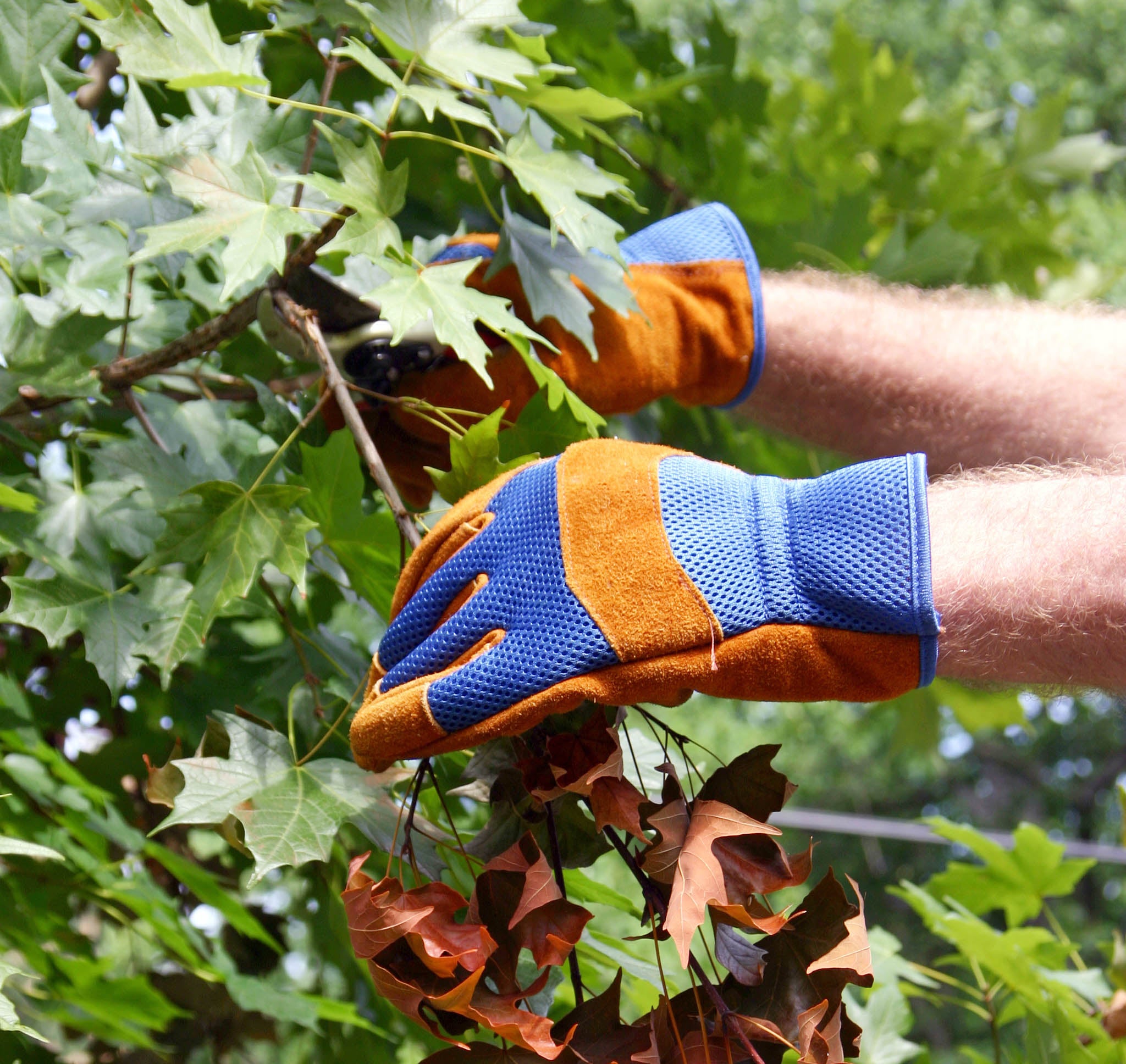
Just a reminder about next Saturday’s pruning class (11 am).  This can be a challenging issue for homeowners – where to cut, when to cut, how to cut, and WHY?  Lyle Feilmeier from Collier Arbor Care will be here to answer all your questions.  Space is still available, so let us know if you’d like to register for this free class.  (503-649-4568, or email at events@farmingtongardens.com).

As an added bonus, and to get you all ready for the season ahead, we’ll have a professional tool sharpener here to bring your tools up to speed (he’ll be here from 10:30 till he’s finished).  The first 50 customers will get one pruner sharpened free of charge.  These are the prices Harold has given me for most items; these may vary depending on the condition and size of the item.  Checks and cash only, please; no credit cards for sharpening services.

  • pruner ~ $4
  • lopers ~ $6
  • mower blades (removed) ~ $6 each (he is not able to do the old-fashioned push mower types)
  • shovels ~ $3
  • hoes ~ $2
  • scissors ~ $4
  • knives ~ $4
  • hand trowel ~ $1

I don’t know about you, but I can hardly wait to get all my tools sharpened – such an opportunity!

  • Share/Bookmark
Saturday, February 06th, 2010 | Author: LindaS

Today’s class with Tom Combs covered everything the homeowner needs to know about dormant spraying.   Tom was a wealth of information, and made it seem easy and accessible to the novice.  He stressed that if we could manage to dormant spray three times, we could mitigate many problems with our fruit trees.  He suggested we aim for Thanksgiving, early January, and right before bud break as a minimal spraying schedule.  And if that sounds too much to manage, then the last one in late winter is the most important. 

The weather forecast this week is showing some pretty decent weather, so if you haven’t gotten around to doing your dormant spraying, then this is your week!  Remember you only need three hours of dry weather following spraying and you’re fine.

A question was asked today about crystals in the solution.  The shelf life of Bonide’s Liquid Copper is fairly long, as long as it doesn’t freeze.  If you are storing these kinds of products in the garage or a garden shed, that may not be enough to keep them from ruination during freezing weather (as we had this past December).  Tom said to shake the bottle – you will hear crystals rattling around if it froze; sorry to say it will need to be replaced.

Here is Tom’s Ideal Fruit Tree Spraying Schedule:

  • Fall (as soon as leaves fall off); spray with Liquid Copper (1 Tbsp/gallon); this helps control bacterial blights, leaf curls, and other fungal diseases.  Spray the ground and tree thoroughly.  Tom recommends adding 1 tsp of Turbo Spreader Sticker to this mix to enhance its effectiveness.
  • Winter (when trees are dormant – around Super Bowl Sunday); spray with Liquid Copper (1 Tbsp/gallon); this helps control bacterial blights, leaf curls, and other fungal diseases.  Spray the ground and tree thoroughly.  Do not mix with oil.  Add Turbo Spreader Sticker as noted above.
  • Winter (when trees are dormant – around Super Bowl Sunday); spray with All Seasons Spray Oil (5 tbsp/gallon); kills overwintering insects on dormant trees.  Do not mix liquid copper together with oil.  Let the copper dry on the tree before spraying the oil.
  • Spring 1 (when buds start to swell); spray Liquid Copper (1 Tbsp/gallon); Helps control bacterial blights, leaf curls, and other fungal diseases.  Add Turbo Spreader Sticker as noted above.
  • Spring 2 (7 days after Spring 1 application); same application as Spring 1
  • Spring (after 2/3 of the flower petals have fallen); spray with Fruit Tree Spray, Eight (permethrin), or Captain Jack’s Dead Bug Brew (Spinosad); follow label instructions; this application of an insecticide helps prevent insects from attacking the fruit and trees.

The above basic applications should control the most common diseases and insects affecting fruits containing pits.  If other problems should occur, here are some suggestions of sprays to use:

  • Fruit Tree Spray – controls insects and disease
  • Orchard Spray – controls insects and disease
  • Eight - controls insects
  • Fung-onil – controls disease
  • All Seasons Spray Oil – controls insects
  • Captain Jack’s Dead Bug Brew – controls insects
  • Traps – for apple maggot and coddling moth

These sprays are all useable on edibles, vegetables included.  As always, follow the label when applying these sprays, paying special attention to the amount of time necessary between the final spray application and harvest. 

There is so much more from this class that I could write about, but this post is long enough.  Watch for future posts about a Summer Spray Guide,  Captain Jack’s Dead Bug Brew, and more!

  • Share/Bookmark
Friday, February 05th, 2010 | Author: LindaS

Some are saying we could expect an early spring this year – good news indeed!  If that is the case,  it is time to set out your mason bees.  We have top-quality straws with larvae ready to hatch when spring arrives.  Each 2-straw unit is guaranteed to contain at least 15 viable larvae and to be healthy and mite-free.   We also have two sizes of starter blocks.

We make it super-easy to create a hospitable environment for bees in your garden!


  • Share/Bookmark
Category: General Blog  | Tags:  | Leave a Comment
Monday, February 01st, 2010 | Author: LindaS

Our season of classes started off with a roar this weekend!  Thank you everyone for your understanding as we use a temporary location for our ‘classroom’ until our new space is finished.  At least it was warm and dry, and maybe that’s all we need from a classroom in January…

Ernie Carlson from Botanical Interests Seeds gave a  great talk on what we should be thinking about now for seed-starting.  Over the next few days, I’ll post some seed-starting pointers, for those of you who missed the class.  And if you’d like copies of his handouts, they can be found at http://www.botanicalinterests.com/gardening_tips.php.  There is a handy chart, “Indoor Spring Sowing Guide,” which lists how many weeks in advance to start seeds indoors, before it is safe to plant outside.  A very useful reference.

Before starting seeds indoors, however, you need to know when our last frost occurs.  Most resources will  confirm that in the Portland metro area, we are usually safely out of frost danger after April 26.  Naturally, that is dependent upon where you live – higher elevations will be later, and unique micro-climates can vary widely.  So be aware, if you are planting out some tender things towards the end of April and into early May, be aware of the weather forecast, and protect your fragile babies if needed.

But for seed-starting indoors, that date is your general guideline.  Use the Indoor Spring Sowing Guide with that date in mind, as you plan.  For instance,  let’s say you want to start some kale seeds – and the chart says to start them indoors 6 weeks before average last spring frost.  So, looking at the calendar, you will want to start those seeds about March 15th.  Make sense?  When grown under the right conditions and from the correct starting date, your seedlings should be ready to plant out when the weather is just right for them!

Next time we’ll talk about the best materials to use, and the all-important LIGHT issue.

  • Share/Bookmark
Sunday, January 31st, 2010 | Author: LindaS
February 20, 2010
11:00 amto12:00 pm

For those of you unable to get into Saturday’s mason bee class (sorry for the too-small classroom while we are under construction!!  Good things  are coming, we promise!), we have a second session scheduled for Saturday, February 20th at 11 am.  Beth Rose, from Farmington Gardens, loves talking about these bees, and it shows - this was by far our most popular class last year. 

The interest in mason bees keeps growing, even as problems with honey bees persist nationwide.  This docile native bee is a great friend in the garden, pollinating like crazy.  Just a few simple steps will encourage mason bees to inhabit your garden.  If you have any fruiting plants in your garden, then having these helpers nearby is a very good thing. 

This is a free class, but since space is limited, we ask you to call to register:  503-649-4568; or email us at events@farmingtongardens.com.

  • Share/Bookmark
Saturday, January 30th, 2010 | Author: LindaS
February 13, 2010
11:00 amto12:00 pm

Why does pruning seem so perplexing?  We coddle our favorite plants, and are afraid we will damage them with inappropriate care or incorrect pruning!  Well, if this is you, then we’ve got just the class for you.  Lyle Feilmeier from Collier Arbor Care will be here to  share the basics  -

  • when to prune
  • where and how to make the cuts
  • the right equipment for different tasks
  • as well as the underlying reasons why we sometimes need to prune 

You will leave with the confidence you need to maintain your garden throughout the year! 

Bring your tools in for sharpening – we’ll have a professional on site.  First 50 people will get one pruner sharpened free; additional tools at reasonable prices.

This class is free, but space is limited – and only a few seats remain; please register with your name, phone number, and number attending at events@farmingtongardens.com or call us at 503-649-4568.

  • Share/Bookmark
Thursday, January 28th, 2010 | Author: LindaS

After an unprecedented winter closure, we are opening again on Friday, January 29th.  We have been busy doing some much-needed improvements to our store, and have expanded our retail footprint as well.  This means a much more comfortable shopping experience for you, as well as more room to carry more of the unique and beautiful plants you have come to expect from us. 

New plants will be coming in every week, so please consider this your personal invitation to stop in and say “Hi”.  We’ve missed you, and  look forward to seeing you soon!

  • Share/Bookmark
Thursday, January 21st, 2010 | Author: LindaS

Now that the holiday festivities are behind us, the house seems a little colorless and dreary.  If you are looking for a way to bring some life to your home but don’t want to wait for spring bulbs, then here is a simple solution:  forcing branches into blossom!   These simple bouquets are elegant and easy, giving us hope of the spring ahead.  If you don’t have a couple of these in your garden, you really should find a place for them.

What does ‘forcing’ mean?  Basically it means to speed up the blooming of woody trees and perennials.  Many of these set their buds months earlier, but have a long period of dormancy during the winter.  By cutting and bringing these bare branches into a warm home environment, we can bring them out of their dormancy and into bloom sooner than they would in the outdoors.

As for how to force branches:  it is super easy.  Simply prune branches with  buds and place indoors in a vase with water and floral preservative.  Give a clean cut at an angle, and keep the water clean,  as you would for any flower arrangement.   Then relax and enjoy watching their buds unfurl!  Often, these blooming branches will retain their blossoms for a week or more.  And by staggering your cuttings, you can have blooms for several weeks.

Best choices for forcing:

  • Forsythia
  • Cornelian cherry
  • Filberts
  • Fothergilla
  • Witch hazel
  • Cherries
  • Beeches
  • Birches
  • Eastern Redbud
  • Lilacs
  • Magnolias
  • PJM rhododendron
  • Quince
  • Serviceberry
  • Willow
  • Share/Bookmark
Tuesday, January 19th, 2010 | Author: LindaS

Frankly, January is a pretty good month to stay inside and read a gardening book.  Or peruse beautiful seed catalogs and envision the garden of your dreams.   But for those of you who would like some additional suggestions, here are some productive things you could be doing this month:

  • If you’ve been keeping a garden journal, this is a good time to pull it out and reflect on the past year.  What went well for you and what did not?  Are there lessons to be learned that you could apply next season?
  • Take hardwood cuttings of deciduous ornamental shrubs and trees for propagation.
  • Assess which ornamentals need to be replaced this spring – either through cold weather losses or varieties which are not as disease resistant as you would like.
  • Clean pruners with rubbing alcohol, and sharpen those and other tools as needed.
  • Winter wind is is very drying for plants – place windbreaks around plants that are sensitive to cold, dry winds.
  • Stay off lawns as much as possible, as it causes soil compaction and kills turf.
  • Don’t forget to occasionally water plantings  that are protected from winter rains under eaves.
  • Use dormant sprays of lime sulfur or copper fungicide on roses for general disease control.

Don’t you feel better having a list?  Now, back to that book and comfy chair by the fire!

  • Share/Bookmark
Friday, January 15th, 2010 | Author: LindaS

One of the markers of the start of every new gardening season is the annual Yard, Garden and Patio Show, produced by the Oregon Association of Nurseries.  What a visual extravaganza of sights and fragrances to bolster the spirits on these cold winter days.  It is an inspiring experience to see the plant combinations used in the many display gardens, and to see some of the new garden gadgets available.  I always peruse the speaker schedule, finding several that pique my interest.

Farmington Gardens will be showcasing some of our favorites, so stop in and say hello.  And pick up an FG discount coupon to bring back here for your spring shopping.

Oregon Convention Center, February 12 – 14

Tickets are available at the door, or online at http://www.ygpshow.com/.

  • Share/Bookmark
Wednesday, January 13th, 2010 | Author: LindaS
February 6, 2010
11:00 amto12:00 pm

Why is it that spraying trees or shrubs seems a little scary?  We frequently get inquiries from people seeking more information about ~ 

  • what plants benefit from seasonal spraying
  • how to do it
  • what to use
  • and the timing of the spraying 

We will demystify this whole topic on Saturday, February 6 at 11 am.  Tom Combs will cover many options for you to consider, whether you are interested in gardening organically, or whether you are okay with ‘conventional’ remedies.  There are excellent options for everyone.

A little preventive care now for roses, lilacs, cane berries, grapes, and fruit trees will result in a much easier and more productive season for you!  It is important to give these plants at least a February spraying – come and learn what to use and how.

This is a free class – please reserve your space by either calling us at 503-649-4568, or emailing us at events@farmingtongardens.com with your name and phone number.

  • Share/Bookmark
Tuesday, January 12th, 2010 | Author: LindaS
January 30, 2010
11:00 amto12:00 pm

Our 2010 series of classes  begins soon, and we are as excited as ever to bring you all the information you will need to enjoy being a savvy, knowledgeable, and creative gardener.  This will be another great year for our educational programming – we’ve got some great speakers scheduled for you to meet.  Keep checking this blog for updated information on scheduled classes, or pick up a class brochure when you are in the store.

Our first class is coming up on Saturday, January 30 at 11 am.  Ernie Carlson from Botanical Interests will share his best tips for seed starting.  Whether you are growing vegetables or flowers, this is the most economical way to have those favorites you love to grow.   It is also a great strategy for trying new varieties.   Make plans now to get a jump on the season!

This is a free class; however space is limited, so please register to save your space – call us at 503-649-4568, or email events@farmingtongardens.com, with your name and phone number.

  • Share/Bookmark